
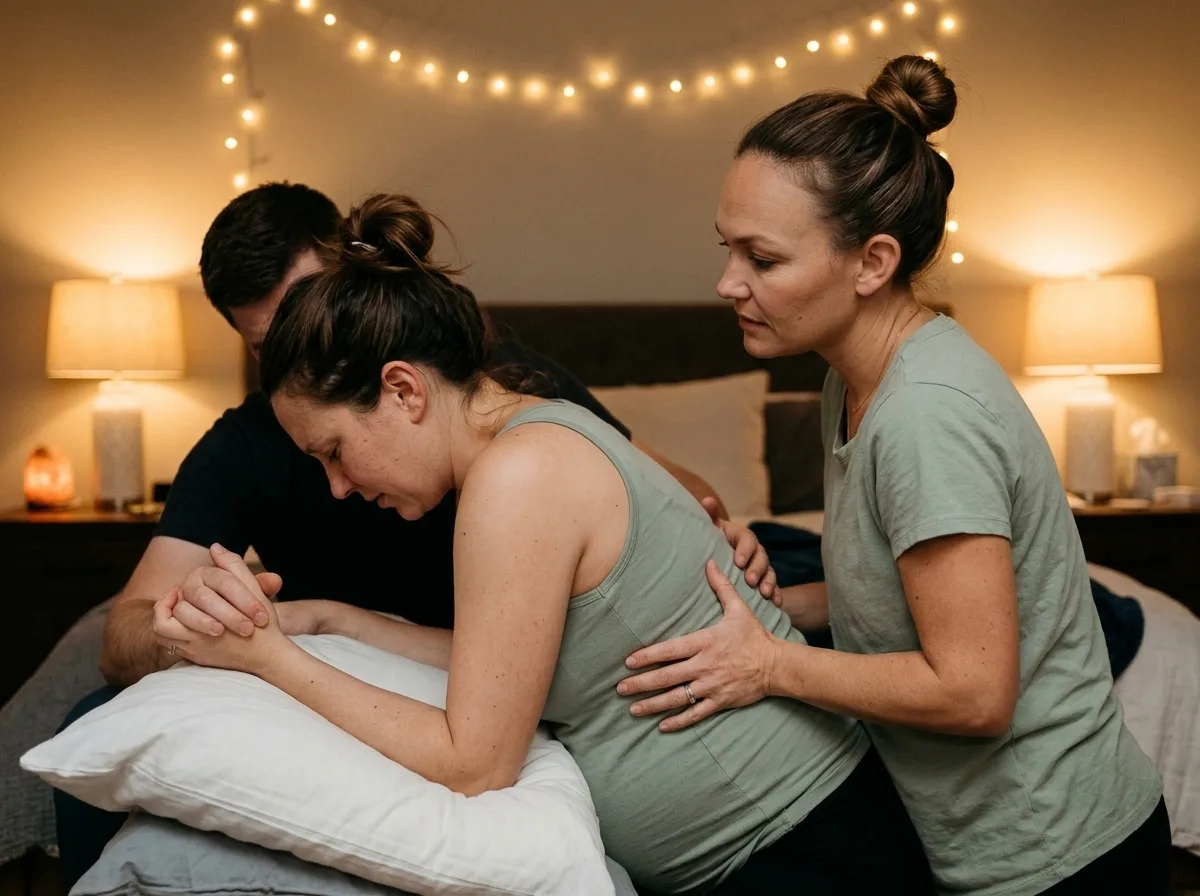
When stepping into a birth room—whether at Kadlec Regional Medical Center in Richland, Trios Southridge in Kennewick, or a candlelit home sanctuary—the emotional atmosphere directly dictates the hormonal cascade of labor.
The Hormone of Love vs. The Hormone of Fear
Labor is governed by oxytocin, the delicate hormone of intimacy, safety, and surrender. Oxytocin flows effortlessly when a laboring mother feels unobserved, protected, warm, and deeply supported.
However, when bright lights, unfamiliar clinical faces, or clinical anxiety enter the room, the sympathetic nervous system triggers adrenaline. Adrenaline constricts blood vessels, halts cervical dilation, and stalls contractions. A doula’s presence acts as a physiological buffer against fear.
What the Cochrane Systematic Review Demonstrates
The Cochrane Systematic Review—the gold standard of medical evidence—analyzed data from over 15,000 women across 26 randomized clinical trials. The findings were extraordinary:
- 39% reduction in the likelihood of a Cesarean birth.
- 35% reduction in negative birth experience ratings.
- 15% increase in spontaneous, uncomplicated vaginal births.
- 31% decrease in the use of synthetic oxytocin (Pitocin) for augmentation.
- 10% reduction in the use of pain medications.
“If a doula were a drug, it would be medical malpractice not to use it.” — Dr. John H. Kennell, Pediatrician & Birth Researcher